When we talk about SEO and user experience, an essential but often underestimated element is the correct use of heading tags: H1, H2, and H3. These tags not only organize content but also help search engines better understand the structure and relevance of each section of your page.
In this guide, you will learn everything you need to make the most of these tags and improve both your positioning and the navigability of your website.
What are H1, H2, and H3 tags in HTML?
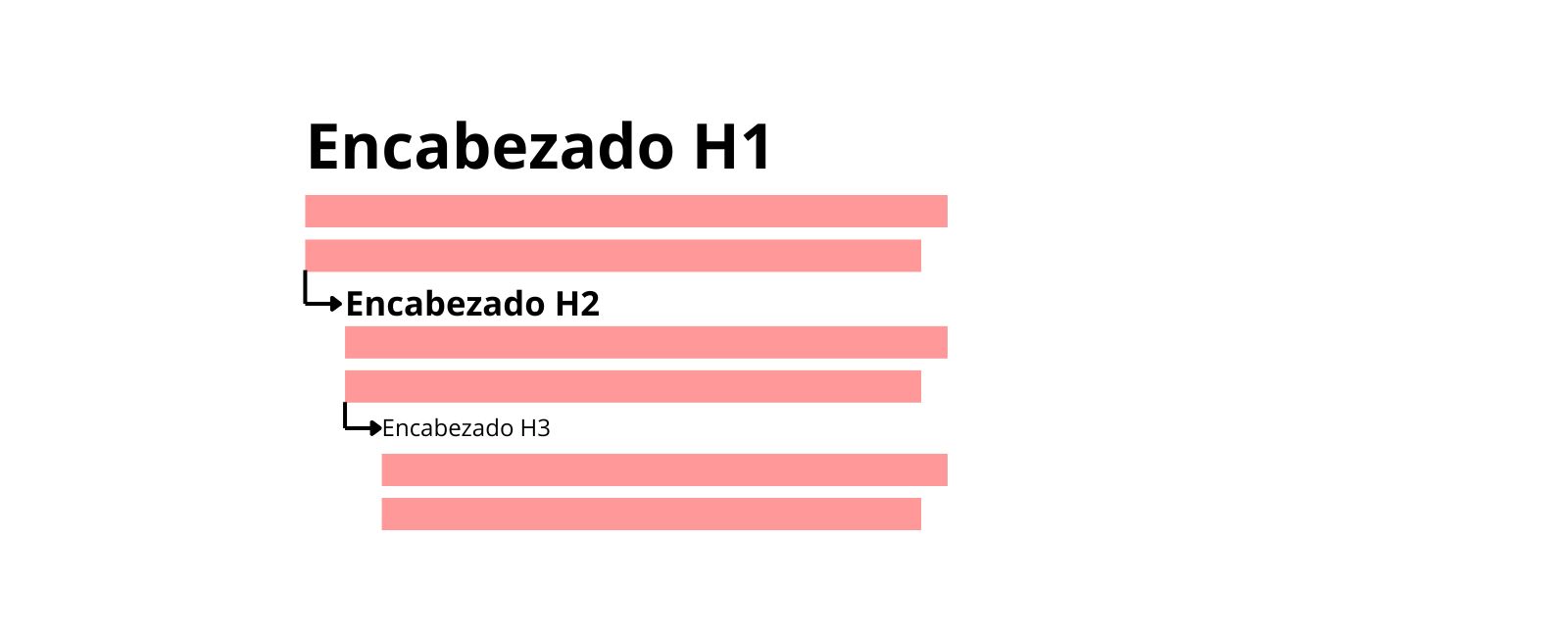
The H1, H2, and H3 tags are key elements in the structure of a web page. These tags define the heading hierarchy, organizing content in a logical and efficient manner.
- H1: The main title, which communicates the primary topic of your page to Google.
- H2: Subheadings that divide content into relevant sections.
- H3: Sub-levels that detail specific points within sections headed by an H2.
Importance of Heading Tags in SEO
Heading tags are one of the key factors for on-page SEO. They allow Google to better understand the topic and the keywords you want to rank for.
- They help search engines understand the content and its relevance.
- They facilitate the identification of the primary keyword and secondary keywords.
For example, if your primary keyword is “H1 tags,” include it in the H1 and use related terms like “HTML tags” or “heading structure” in the H2s and H3s.
Improving User Experience
Well-structured content:
- Makes reading more fluid.
- Reduces the bounce rate, as users easily find what they are looking for.
- Increases dwell time, a key factor for SEO.
Remember: Google values pages that are useful and easy to navigate.
The H1 Tag: The Main Pillar of Content
The H1 tag is the main title of your content. It is the first element that search engines and users see to understand what your page is about.
- Use only one H1 per page.
- Include the primary keyword naturally.
- Ensure it is unique and relevant.
- Titles that are too long.
- Using multiple H1s, which confuses both users and Google.
The H2 Tag: The Structure of Your Content
The H2 tags act as subheadings that divide your content into clear, thematic sections. These tags should include secondary keywords or derivatives of the primary one.
- Divide your content into thematic blocks.
- Ensure each H2 addresses a relevant question or subtopic.
- Use clear and persuasive language to engage the reader.
The H3 Tag: Content Sub-levels
The H3 tags are ideal for delving into details or subdividing broader sections headed by an H2.
If an H2 addresses “Benefits of H2 Tags,” an H3 could detail:
- They improve navigation and content comprehension.
- They allow for the introduction of long-tail terms to enrich the text.
Conclusion: How Heading Tags Boost Your SEO Strategy
Mastering H1, H2, and H3 tags is essential for standing out on Google and providing a better user experience. Implement these practices and optimize your content to reach the top spots in search results.
Start today and see how these small improvements positively impact your positioning and web traffic.
Related posts
How to Increase Your Hotel’s Direct Bookings and Reduce Dependence on OTAs
Every time a customer books your hotel through Booking.com, Expedia
What is PrestaShop and how does it work? The ultimate guide to launching your online store
Looking to sell online? We tell you what PrestaShop is, how it works, and why a custom design is key to your store’s success. We can help you at Creacom!
Ultimate Guide to Using H1, H2, and H3 Tags: Improve Your SEO and User Experience
Discover the ultimate guide to using H1, H2, and H3 tags in your content. Improve your SEO, organize information hierarchically, and enrich the user experience with these essential practices.
About me
Pere Cuadros – Marketing Manager
My profile
Shopify: Real Costs and Fees in 2024, Is It Really That Cheap?
October 25, 2024
Complete Guide: Creating Your Shopify Store Step by Step
October 25, 2024
What is Shopify? The Complete Guide for Beginners in 2024
October 25, 2024